
Open-cell foam insulation
A softer, more flexible foam option suited to interior walls and sound control where moisture barrier performance is less critical.
Learn more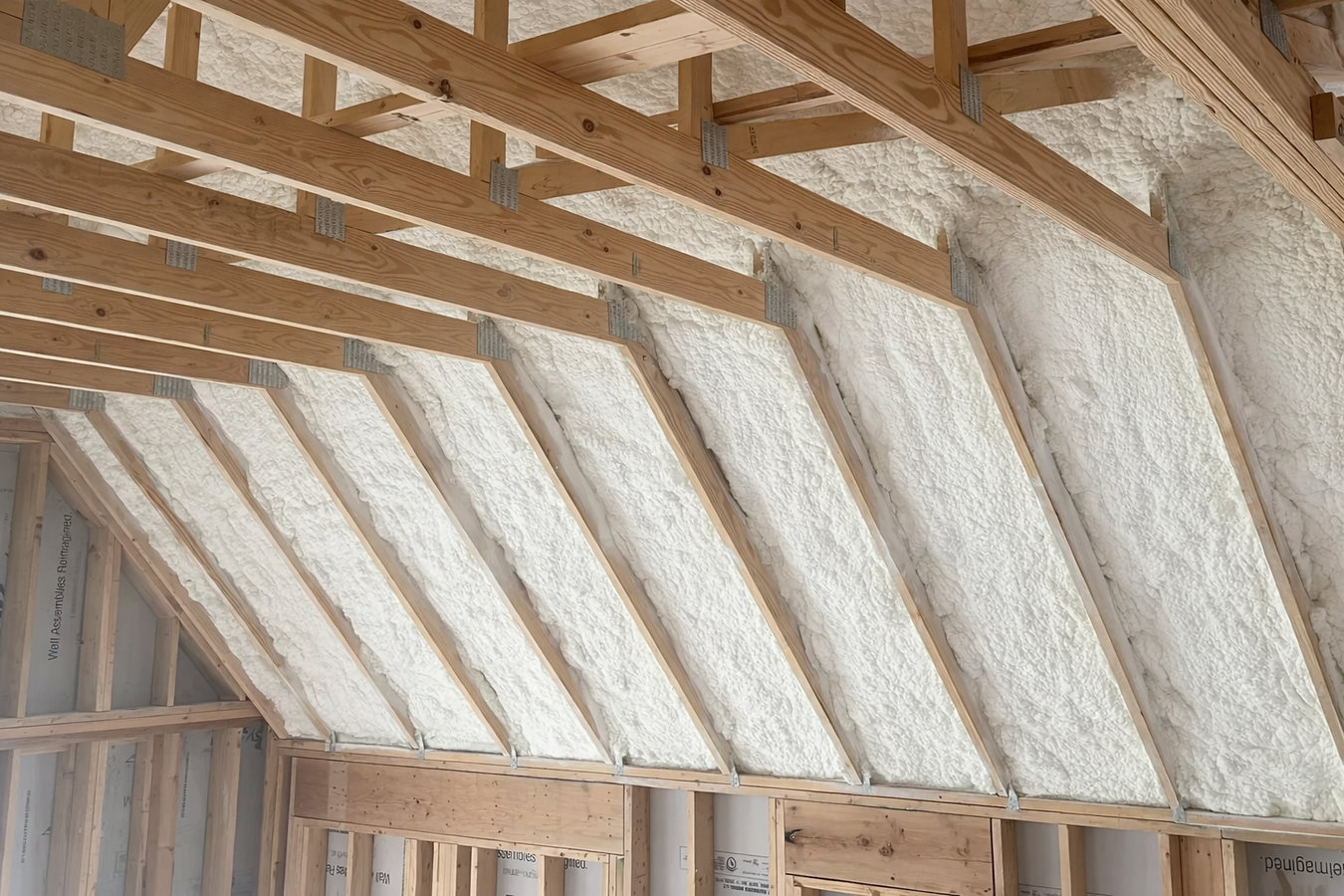
Valdosta summers push heat and humidity into every gap in your home. Closed-cell spray foam seals air leaks, blocks moisture vapor, and delivers the highest R-value per inch available - all in one application.
Closed-cell foam insulation in Valdosta is a two-part liquid sprayed onto walls, ceilings, or crawl space surfaces where it expands and hardens into a dense, rigid layer that seals air gaps and blocks moisture vapor - most residential jobs are completed in one to two days, and the foam reaches its full hardness within 24 hours.
What sets it apart from fiberglass batts or blown-in insulation is that it does two jobs at once: it insulates and it seals. In Valdosta's climate, that combination is genuinely valuable. The city sits in Climate Zone 2, one of the hottest and most humid zones in the continental United States, and in that kind of heat the biggest enemy of your cooling system is not just temperature - it is humid outdoor air finding every gap around pipes, wires, and framing. Closed-cell foam closes those gaps permanently. It also does not sag, settle, or absorb moisture over time the way fiberglass can in a humid crawl space. Homeowners who want the broadest coverage often pair closed-cell foam in the crawl space or attic with open-cell foam insulation in interior wall cavities where the primary need is sound control and heat resistance rather than moisture barrier.
The upfront cost is higher than batt insulation, but it lasts the life of the home. For a Valdosta homeowner weighing a one-time investment against years of elevated summer cooling bills, the math tends to favor foam.
If your electric bill spikes sharply from May through September and the gap has grown compared to previous years, your home may have insulation that has degraded or was never adequate for Valdosta's climate. A home with poor air sealing and thin insulation can cost meaningfully more to cool each summer than a well-sealed home of the same size. That gap compounds every year the problem goes unaddressed.
If you walk across your floor in July and it feels warm or slightly humid underfoot, the crawl space below is likely allowing ground moisture to rise through the floor structure. This is common in Valdosta homes built on crawl space foundations, and it tends to get worse as the original vapor barrier ages. Closed-cell foam on the crawl space walls stops this at the source.
Rooms that never seem to cool down as well as the rest of the house - especially back additions, bonus rooms, or rooms at the far end of the house - often have gaps in insulation or air sealing around their framing. You can feel the difference in summer: those rooms are always a few degrees warmer and the AC never quite catches up.
Homes built before the mid-1990s in Valdosta were constructed to insulation standards far below what is recommended today. Many have no insulation in the crawl space at all, and whatever is in the attic may have settled or been damaged by moisture. If you have never had a professional look at your insulation, that uncertainty is itself a reason to schedule an assessment.
We install closed cell spray foam throughout the Valdosta area, in crawl spaces, attics, rim joists, wall cavities, and exterior-facing surfaces. Where we apply it depends on your home and what the assessment reveals - crawl space walls and rim joists are among the highest-impact locations in most Valdosta homes because that is where ground heat and moisture enter first. We also apply closed-cell foam in attic assemblies, where it creates a sealed envelope that dramatically reduces the heat load your air conditioner has to fight on a July afternoon. For homeowners who want the most airtight system available, foam in the attic is often paired with spray foam insulation on other surfaces for full building envelope coverage.
Before spraying, we prepare the surface and remove any existing insulation that is damaged, wet, or incompatible with foam. We also check for moisture issues - spraying foam over a wet or damp surface traps moisture and can cause the foam to fail to adhere properly. That preparation step is not optional in Valdosta's climate, and any contractor who skips it is creating a problem for later. After the job, you and your family will need to stay out of the treated area for the curing period; your contractor will give you a specific re-entry time before the work begins.
Highest-impact application for most Valdosta homes - stops ground heat and moisture vapor at the foundation perimeter.
Creates a sealed attic assembly that dramatically reduces summer heat gain - best for homes where the attic is a major source of cooling load.
For new construction or open-wall renovations where maximum moisture resistance and R-value per inch is the priority.
For homes with degraded, wet, or fallen insulation that needs to be cleared before closed-cell foam can be applied properly.
Valdosta's climate puts more demand on insulation than most of the country. Summer temperatures regularly reach the mid-90s, the air stays thick with humidity from May through October, and the average annual rainfall exceeds 50 inches - most of it falling in intense afternoon storms. In that environment, insulation that absorbs moisture loses its effectiveness quickly, and air leaks that would be a minor inconvenience in a drier climate become significant energy drains here. Closed-cell foam is the material best suited to these conditions because its density resists both heat transfer and moisture vapor simultaneously. Moody Air Force Base families and other homeowners near the base who plan to sell or rent often find that documented insulation upgrades show up in utility costs that help close deals faster. The Spray Polyurethane Foam Alliance provides installation standards and product guidance that qualified contractors follow on every job.
Many Valdosta neighborhoods have a large share of homes built in the 1950s through 1980s - including areas near Valdosta State University and older streets in and around downtown. Those homes were built when insulation requirements were far less strict than they are today, and many have crawl spaces with no insulation at all or attics with settled, degraded material. Getting a professional assessment costs nothing and gives you a clear picture of where your home is losing energy. We regularly work on homes across Lowndes County and in communities like Waycross and Moultrie where the same older housing stock and climate conditions apply. ENERGY STAR explains the federal tax credit available for qualifying insulation upgrades, which can offset part of the project cost.
We respond within 1 business day. We ask about your home - its age, which spaces you want addressed, and any comfort or energy issues you have noticed. No obligation, and it helps us arrive at the walk-through prepared.
A technician walks through your home, measures the spaces to be insulated, and checks for moisture or existing damage. This visit takes 30 to 60 minutes. You receive a written quote specifying the area, foam thickness, and total cost - no guessing.
Clear the area to be insulated and plan for you and your family to be out of the home on installation day. Your contractor gives you a specific re-entry time before the job starts. Most homeowners are back the following day.
Most residential jobs take one full day to spray. The foam hardens within hours and reaches full strength within 24 hours. When you return, a good contractor walks you through the coverage to confirm it looks right before closing out the job.
We respond within 1 business day. No pressure - just a walk-through of your home, an honest assessment of where the energy loss is coming from, and a written estimate with everything spelled out. Call or submit the form below.
(229) 427-0227Humid subtropical conditions in Lowndes County demand different decisions than cooler or drier climates. Every foam application we recommend accounts for Valdosta's moisture levels, not just the heat. That local knowledge changes which products we use and where we apply them.
We work throughout Valdosta and into Thomasville, Tifton, Waycross, Douglas, and as far south as Lake City, FL. The same Climate Zone 2 conditions apply across this region, and we have handled them in every community we serve.
Closed-cell foam applied over a damp surface can fail to adhere and may trap moisture underneath. We check for moisture conditions in every space before we spray - that step is required for the foam to perform as intended in Valdosta's climate, and we never skip it.
Spray foam jobs require homeowners to vacate the treated area. We give you a specific re-entry time in writing before the crew begins - not a vague estimate, but a firm commitment. You will know exactly when you can return and what was done before we close the job.
Closed-cell foam is a long-term investment, and in Valdosta it is one that pays back through lower summer energy bills, a more comfortable home, and insulation that does not need to be replaced in 15 years. Call (229) 427-0227 or request a free estimate online.
A softer, more flexible foam option suited to interior walls and sound control where moisture barrier performance is less critical.
Learn moreFull spray foam services covering attics, crawl spaces, and wall assemblies - closed-cell and open-cell options matched to each application.
Learn moreSummer is the hardest season on Valdosta homes - the sooner your home is sealed, the sooner you stop paying for it on your Georgia Power bill every month.