
Wall insulation
Seal the full building envelope - pair crawl space work with wall insulation to address heat gain from every direction.
Learn more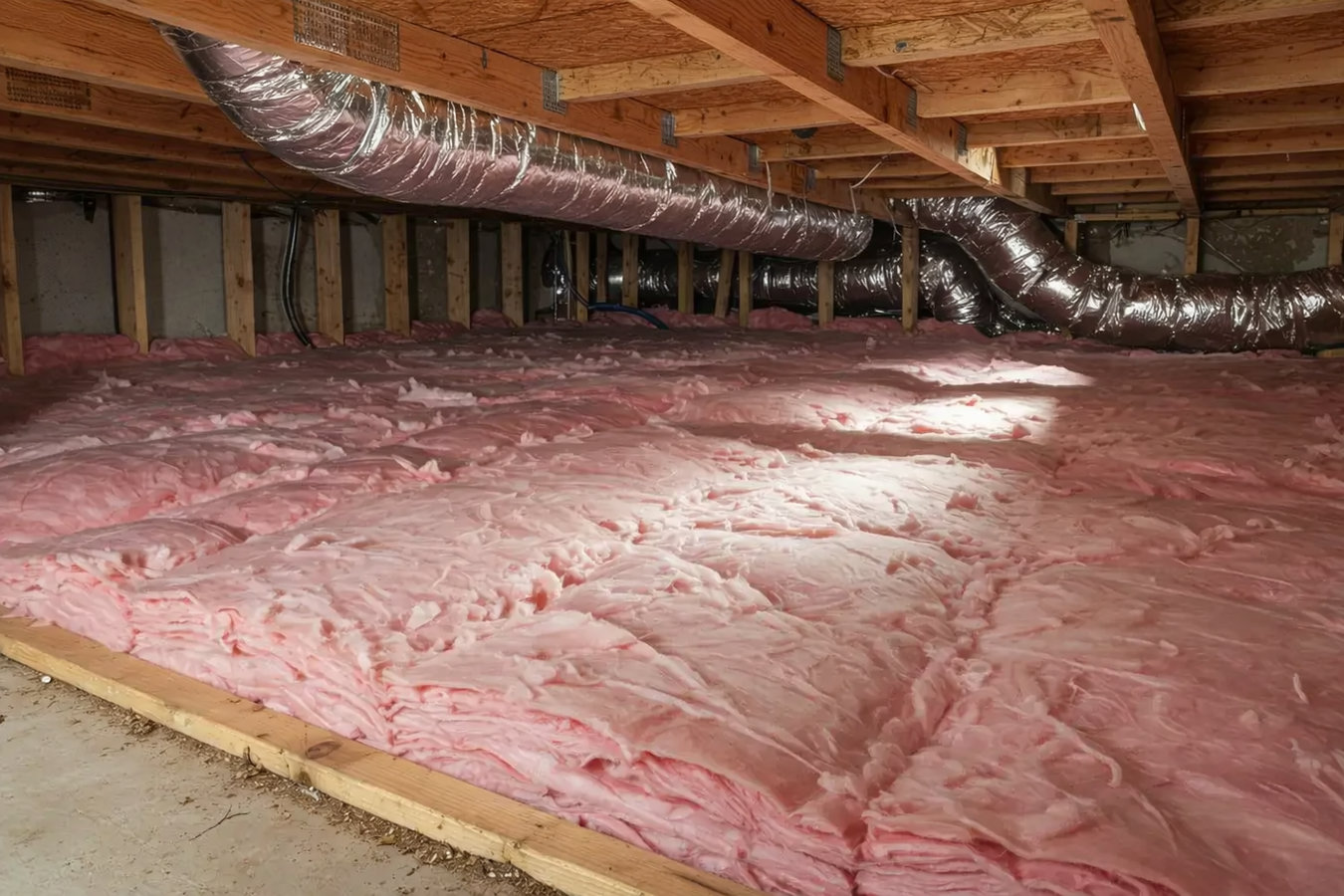
An uninsulated crawl space is one of the biggest sources of heat gain and moisture in a South Georgia home. We seal it properly so your floors stay comfortable and your AC does not have to fight from below.
Crawl space insulation in Valdosta acts as a thermal barrier between the warm, moist ground beneath your home and the living spaces above it - most jobs on a standard home are completed in one to two days. Without it, that heat difference seeps up through your floors, makes rooms uncomfortable, and forces your heating and cooling system to work harder than it should.
The challenge in Valdosta is that crawl spaces do not just lose energy - they also let in moisture. South Georgia's average annual relative humidity regularly exceeds 70 percent, and that moisture finds its way through vented foundation walls and bare soil directly into the space beneath your floor. Homes built before the 1980s in neighborhoods near Valdosta State University and along North Patterson Street are especially likely to have minimal or no vapor control in the crawl space. If moisture is already an issue, simply adding insulation over a wet crawl space will trap it and make things worse - which is why the right approach here often involves more than just insulation material. Many homeowners in this situation also benefit from a crawl space vapor barrier installed at the same time.
The result when it is done right: floors that do not feel like they are pulling heat from the ground in July, a musty smell that disappears, and an energy bill that reflects a home that is actually sealed properly below.
If you walk across your kitchen or living room floor and it feels noticeably warm in July, that temperature is coming up from an under-insulated crawl space. In Valdosta, where summer heat is intense and ground temperatures stay elevated for months, this is one of the most common complaints before homeowners discover the crawl space is the cause.
A persistent earthy or musty smell from floor vents or ground-level closets is almost always a sign of moisture buildup in the crawl space. Valdosta's high humidity means crawl spaces without proper moisture control are nearly always damp - and that dampness creates mold and mildew that you smell long before you see it.
If your cooling costs have increased over the past year or two and nothing obvious has changed, deteriorating crawl space insulation could be the cause. Old fiberglass insulation that has gotten wet, sagged, or fallen away from the floor joists loses most of its effectiveness, and your AC ends up compensating for the heat it can no longer block.
If you open the crawl space hatch and look in with a flashlight, you may see batts that are dark, fallen, or hanging in clumps. That discoloration typically means moisture damage, and insulation in that condition is doing very little to protect your home - it may actually be holding water against the wood structure above it.
We install crawl space insulation throughout the Valdosta area and surrounding South Georgia counties, handling everything from floor joist insulation to full encapsulation systems. The approach we recommend depends on your home's specific situation - the size of the crawl space, its current condition, and whether moisture is already present. For homes where moisture is not yet a significant problem, floor joist insulation with a ground vapor barrier is often a straightforward and cost-effective solution. For homes with persistent damp crawl spaces, full encapsulation addresses the moisture at the source rather than just adding a thermal layer on top of it.
Before any insulation goes in, we remove any old, damaged material - sagging batts or deteriorated foam cannot simply be covered over. We also pair crawl space work with wall insulation for homeowners who want to address the full building envelope at once. In Lowndes County, where termite pressure is among the highest in the United States, we install in a way that does not compromise your existing termite protection - this is a real local concern that every contractor working in a crawl space should be thinking about.
For crawl spaces with manageable moisture - adds a thermal barrier between the ground and your living space.
For crawl spaces with persistent humidity or moisture intrusion - seals walls, floor, and often adds a dehumidifier.
Ground-level moisture barrier that keeps soil humidity out of the crawl space - often paired with new insulation.
For crawl spaces with sagging, fallen, or moisture-damaged batts that need to be cleared before new material can go in.
Valdosta sits in the Coastal Plain of South Georgia, where average annual relative humidity regularly exceeds 70 percent and summer months bring heavy, sustained moisture in the air. That humidity finds its way into crawl spaces through vented foundation walls and bare soil - which is why contractors here almost always recommend a vapor barrier, and often full encapsulation, rather than just adding insulation to the floor joists. Valdosta falls in Georgia's Climate Zone 2, the warmest zone in the state. The code minimum for crawl space insulation here is relatively modest compared to what energy professionals actually recommend for comfort and savings in this climate, so asking your contractor what they recommend beyond the minimum is worth your time. Homeowners in Valdosta and across Lowndes County also face one of the highest termite-pressure environments in the United States - a detail that shapes which insulation approaches and materials we use in crawl spaces here.
Many of Valdosta's established neighborhoods were built in the mid-20th century when crawl space construction was standard and vapor barriers were rarely installed. If your home was built before the 1980s, the crawl space likely has either no insulation, deteriorated fiberglass batts falling from the floor joists, or bare dirt with no moisture protection at all. We regularly work in these types of homes and understand what it takes to bring them up to a standard that actually performs in South Georgia's climate. We also serve homeowners in Douglas and surrounding counties where the same crawl space conditions are common. The U.S. Department of Energy crawl space insulation guide covers the technical tradeoffs between floor joist insulation and encapsulation in detail.
We respond within 1 business day. We ask about your home's age, any moisture or odor issues you have noticed, and whether anyone has looked at the crawl space recently. Short conversation - no obligation.
A technician accesses the crawl space through the hatch and checks current insulation, moisture levels, and any pest or mold concerns. The visit takes 30 to 60 minutes. You receive a written estimate that breaks down the scope and materials before any work starts.
Clear a path to the crawl space access and empty any closet directly above it. The crew brings all equipment and materials. You do not need to be home for the entire job, but a quick walkthrough at start and end is helpful.
Most jobs take one full day. The crew removes damaged old insulation, addresses moisture if that is in scope, and installs new material and vapor barrier. Before leaving, the contractor shows you what was done and explains what to watch for going forward.
We respond within 1 business day. There is no obligation - just an honest assessment of your crawl space and a written estimate for what it will take to fix it properly. Call or submit the form below.
(229) 427-0227We know what insulation actually needs to do in South Georgia - not just what the code minimum requires. Every recommendation we make is based on what performs in Valdosta's heat and humidity, not what works in a drier climate.
We work throughout Lowndes County and into Thomasville, Tifton, Waycross, Douglas, and as far as Lake City, FL. The crawl space conditions in this region are consistent, and we know them well.
Lowndes County sits in one of the highest termite-pressure zones in the United States. We install crawl space insulation in a way that does not create hidden pathways for termites - a local concern every contractor here should account for.
We do not quote crawl space work over the phone. The condition of your crawl space changes the scope and the price too much to guess. After the on-site visit, you get a written estimate that breaks down exactly what will be done and what it includes.
In South Georgia, a crawl space that is not properly sealed and insulated is not just an energy problem - it is a moisture and structural risk that compounds over time. Getting it right now is much less expensive than fixing rot or mold damage later. Call us at (229) 427-0227 or request a free estimate online.
Seal the full building envelope - pair crawl space work with wall insulation to address heat gain from every direction.
Learn moreA ground-level moisture barrier that stops soil humidity from entering the crawl space - the foundation of any effective crawl space system in South Georgia.
Learn moreValdosta summers are long and the ground beneath your home stays warm for months - the sooner your crawl space is properly sealed, the sooner your floors and energy bills reflect it.